
- Details
- Written by: Ken Furtado
A visual chronology of all the faces and figures that have occupied Quaintance’s easel would astonish viewers.
 Start in the early 1930s, with portraits of diplomats and their wives … separately. Quaintance then became an illustrator for Vogue and Harper’s Bazaar. Later, the '30s brought an avalanche of stars of stage and screen, plus volunteers at beauty shows, wanting George to design hairstyles for them. Closing out the decade were lithographs of clever interpretations of male and female forms and faces.
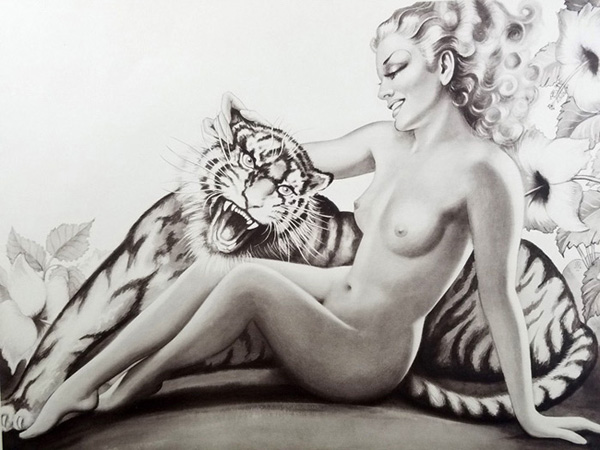
There was also a closet of sorts in the 1930s: an abundance of “glamour nudes who have all it takes to ‘knock 'em dead’ from San Diego to Bangor, from Miami to Seattle.”
- Details
- Written by: Ken Furtado
 Rancho Siesta has cowboys aplenty, horses for them to ride, and all the requisite tack. But the cattle are missing, unless you count the dead bull being dragged out of the arena by a couple of donkeys in Gloria. Where’s the livestock? Or, as Clara Peller might have demanded, “Where’s the beef?!”
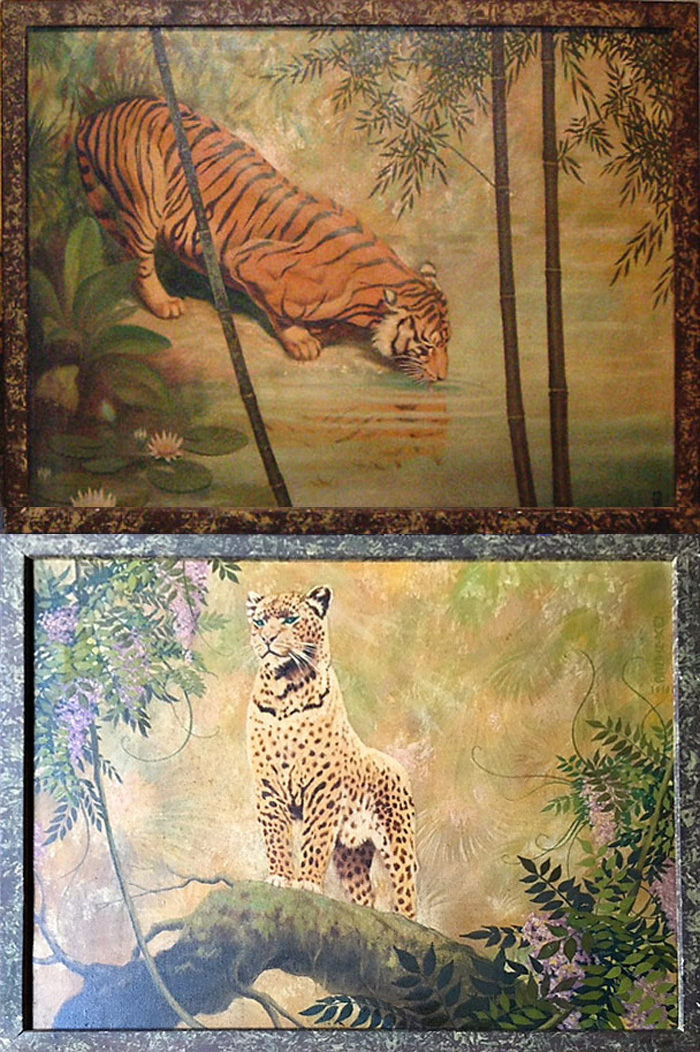
Before the Rancho Siesta era and its horses, Quaintance’s animal of choice was the cat, whether wild or domestic. In 1940, Quaintance painted both a tiger and a leopard, the latter of which complemented a jungle-print gown modeled in the August 1945 issue of Beautify Your Figure magazine.
 The tiger canvas was offered on eBay in 2005; it sold for $800. The leopard is privately owned and resides in Virginia. Both canvases are 32x24 inches. A different tiger appeared in Jungle Morn, a large (18x25 inches) lithograph that was a companion piece to 1939’s catless Moon Flower.
- Details
- Written by: Ken Furtado
Two early Quaintance paintings were among the lots offered by Swann Auction Galleries in a Dec. 4, 2025 auction. Each is signed with the vertical signature used by the artist for most of his pre-1940 work. The medium is gouache, painted on a board. Gouache is a water-based paint that, unlike watercolor, is opaque.
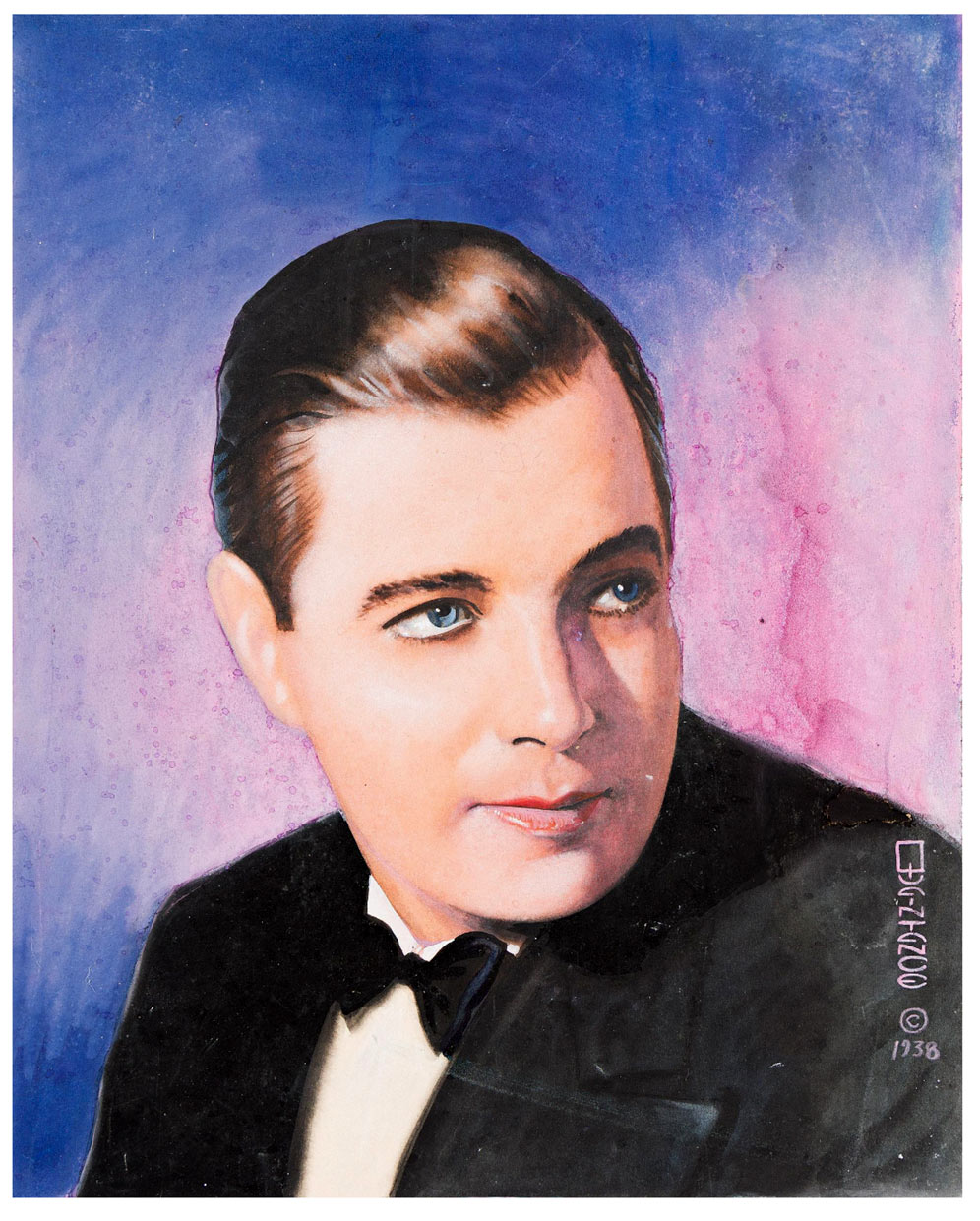 Portrait of Morton Downey is dated 1938, just below the signature in the lower right hand corner. Dimensions are 15x18 inches. Downey was a contemporary of Quaintance and a popular singer-entertainer of the era. Nicknamed “The Irish Nightingale,” his greatest popularity was in the 1920s-30s. There is plenty of information about him online, for anyone wanting to know more.
Th image is not particularly appealing and there were no bids, despite a pre-auction estimate of $600-$900.
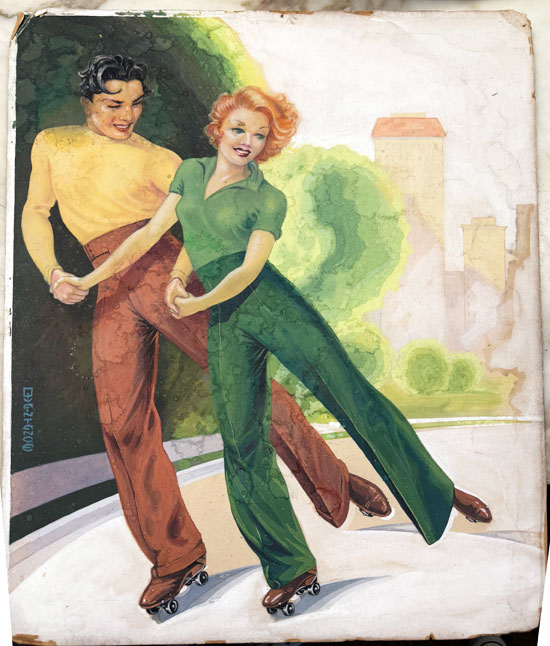
The second painting, referred to as Valentine for Betty & Bob, was more attractive and might easily have served as cover art for a Hallmark greeting card. The auburn-haired model has a Snow White appeal.
- Details
- Written by: Ken Furtado
Everything on this website is free. If you enjoy reading these articles, please consider making a donation to help defray the costs of hosting and domain registration. The "Donate" button will get you started. Thank you.
Demand for Quaintance’s work was almost insatiable. During the studio’s heyday, collectors purchased thousands of chromes, catalogs, model photos, greeting cards, 8x10 black-and-white photos, and sculptures.
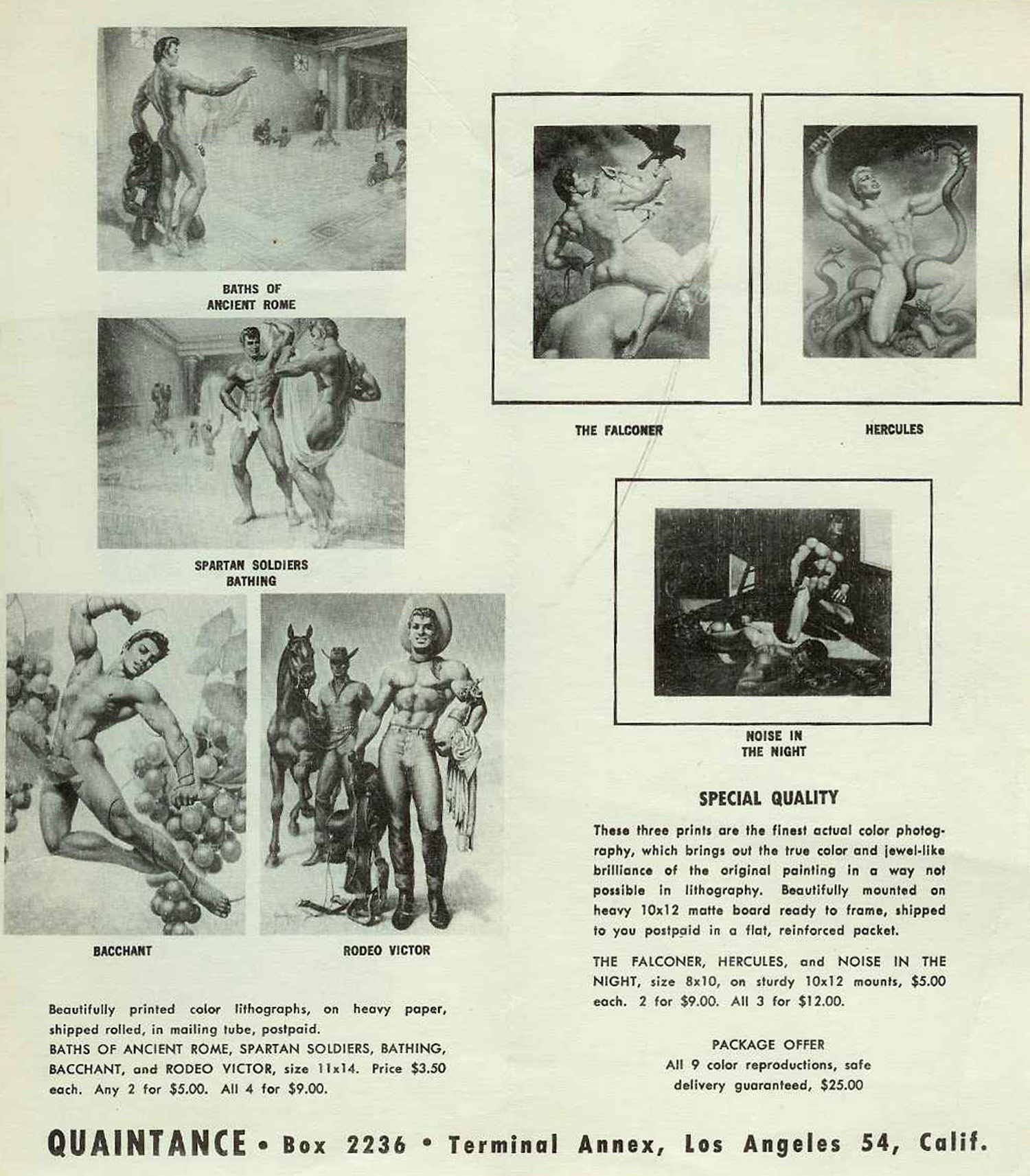 But with few exceptions, buyers did not purchase paintings: a single expenditure of hundreds of dollars was more than most collectors were willing to spend. At the time of his death, Quaintance had sold only about 12 canvases and he had given away one. Seven years later, when Victor Garcia sold Rancho Siesta, 38 of Quaintance’s 55 male physique paintings remained unsold.
Although chromes (slides) of most of the canvases were available for those who wanted to see the paintings in color, they had drawbacks. The pigments oxidized and chromes were not the ideal medium to hang on a wall or tape into a scrapbook.
Before his demise, however, Quaintance hatched a plan to put color reproductions of all his paintings into collectors’ hands. Enter the lithograph.
The first lithographs were Siesta and Preludio — Quaintance’s twin masterpieces. They were printed on heavy stock in colors that carefully duplicated the originals, with a 16x20-inch print area, and ample margins. Price was $5 for one or $8 for both.
- Details
- Written by: Ken Furtado
Everything on this website is free. If you enjoy reading these articles, please consider making a donation to help defray the costs of hosting and domain registration. The "Donate" button will get you started. Thank you.
When Quaintance lived in New York City, photographer Lon Hanagan (aka Lon of New York) introduced him to Joe Weider. Joe and his brother Ben were working-class Jews from Montreal who built a male fitness publishing empire based on the concept that anyone could have a fit and muscular body.
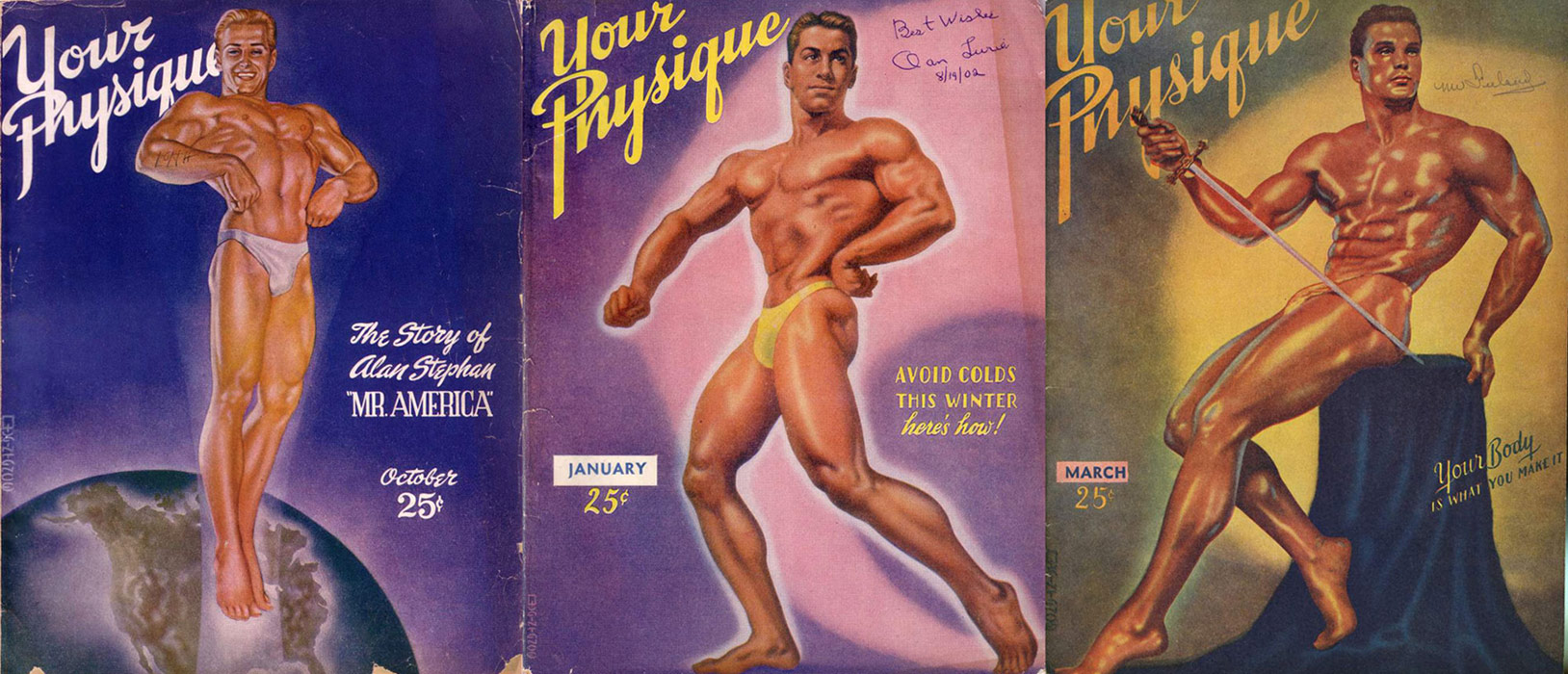
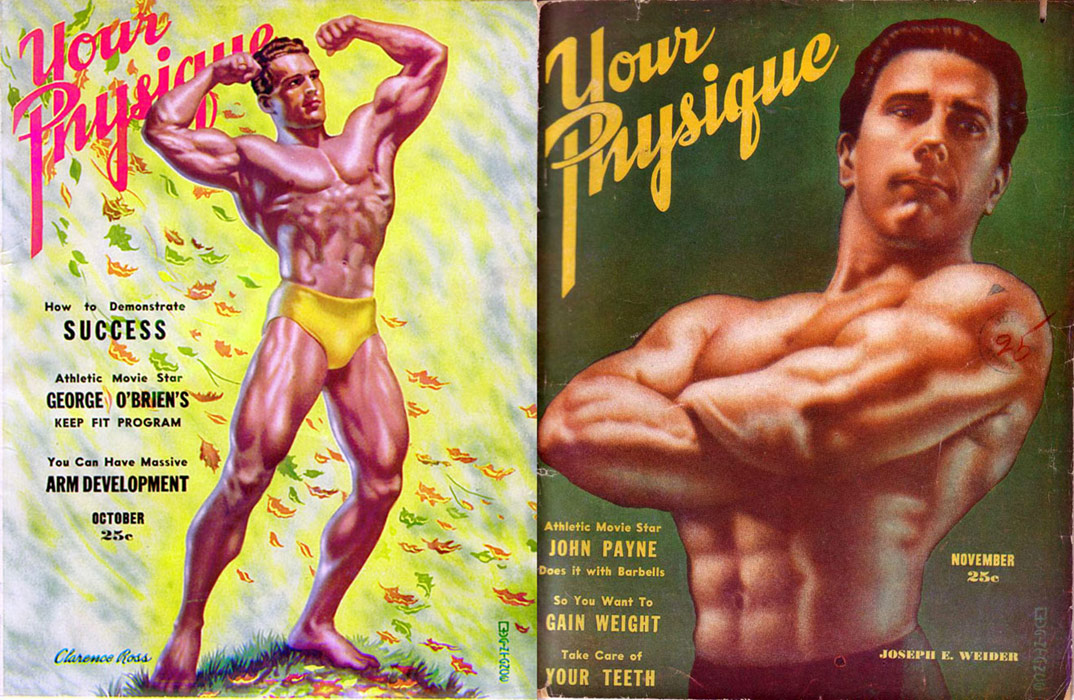 From Sept. 1946 to May 1948, George was the Art Editor of Your Physique and its Canadian cousin, Muscle Power, which had a Hollywood office. During that time, he created 11 cover portraits of celebrity bodybuilders and he wrote numerous articles on health, fitness, grooming and other topics.
Announcing George’s hiring in an editorial, Joe Weider wrote, “[T]he full-time services of George Quaintance, noted American artist, have been secured. Mr. Quaintance is responsible for the unexcelled covers, for the artistic layouts and for the superb organization of all materials, which you will find in this issue and all forthcoming issues of ‘Your Physique’.”
- Details
- Written by: Ken Furtado
Everything on this website is free. If you enjoy reading these articles, please consider a donation to help defray the costs of hosting and domain registration. The "Donate" button will get you started. Thank you.
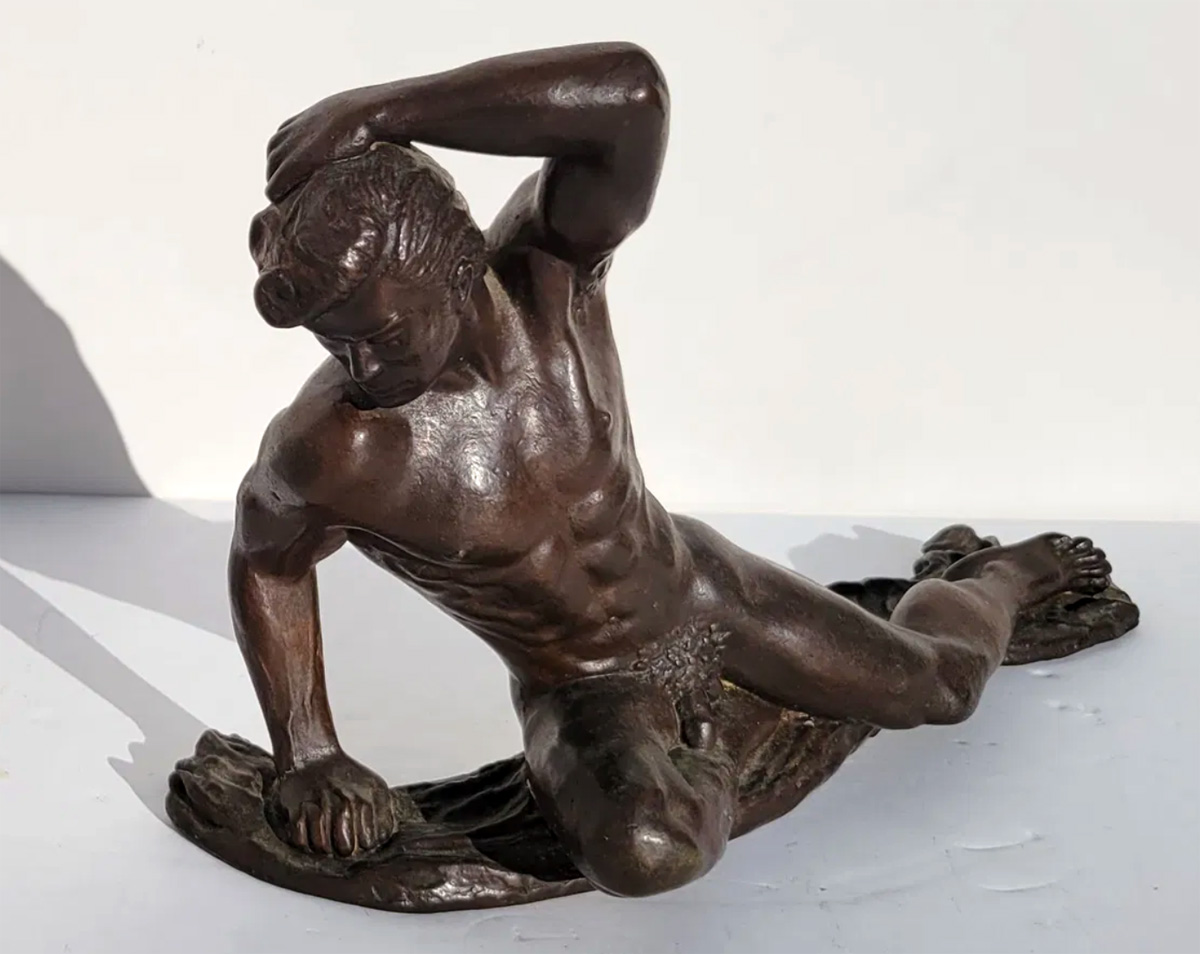 On Nov. 26 I wrote about two figurines sold at a recent online auction. At first glance, they appeared to be Siesta and Narcissus. On closer inspection, however, they reminded me of what happens to my cookies when I use too much baking powder: they get a bloated and puffy look. I concluded that these were fakes.
To be fair to Live Auctioneers, the auction house, the figurines were not identified as being from the Quaintance Studio, and the names Siesta and Narcissus were not used in the description.
Now we have a different circumstance: two lots offered at auction online by the same auction house were not produced by the Quaintance studio, but this time the name of Quaintance was invoked. The auction was held Nov. 30.